
Robotic-Assisted Spine Surgery in New Jersey
Medically reviewed by Kevin Yao, MD
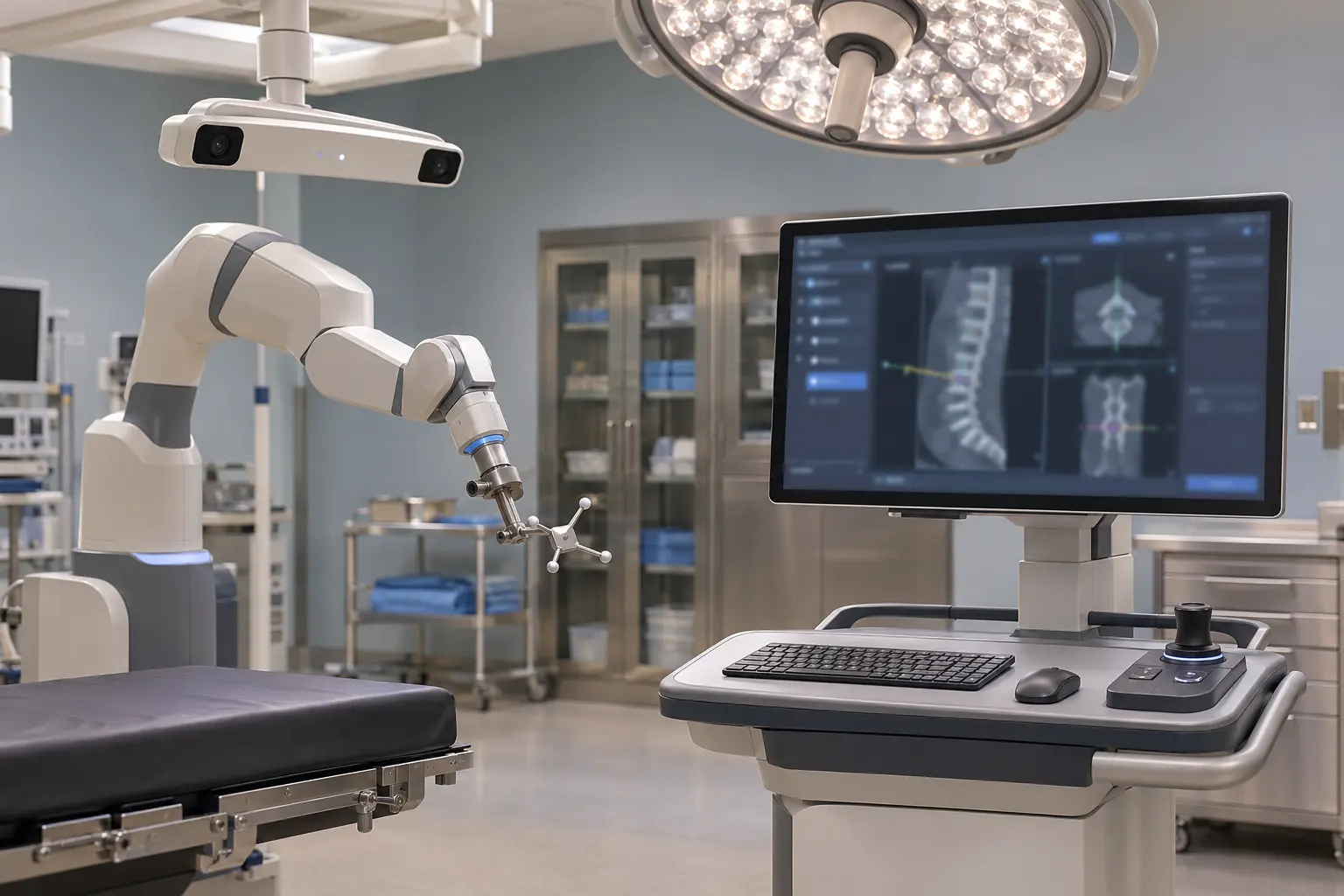
When patients hear robotic surgery, they sometimes picture a machine carrying out an operation while the surgeon watches. That’s not how robot-assisted spine surgery works. The surgeon still makes the decisions and performs the operation. The technology helps with specific tasks along the way.
Robotic-assisted spine surgery combines imaging, navigation, and robotic guidance to support selected procedures, particularly those that involve planning and placing spinal implants. It can be useful in certain anatomical situations. But whether the technology belongs in your operation is a separate question from whether you need the operation in the first place.
What the robot actually helps with
Imagine placing a screw into a vertebra. The surgeon has to choose a safe path through bone near important nerves and other structures. Imaging and navigation can help map that path. A robotic guidance system may then help align surgical instruments with the planned trajectory.
It doesn’t diagnose the problem, decide which levels need treatment, or independently operate. Those responsibilities remain with the surgical team. Put another way: the technology can help carry out a plan, but the decision-making behind the plan, and the quality of the plan matters.
Dr. Kevin Yao was at the forefront of bringing advanced robotic spine surgery techniques into daily use. He was instrumental in initiating and building the robotic spine surgery program at Englewood Hospital, which announced its introduction of the Excelsius robotic imaging and navigation platform in 2022, the first of its kind in New Jersey.
Which spine procedures may benefit?
Some spinal fusion surgeries and other operations involving implantation of spinal hardware may use robotic guidance to support implant placement. Navigation may be particularly relevant when anatomy is complex, when multiple levels are involved, or when prior surgery has altered landmarks.
A straightforward microdiscectomy addresses disc material pressing on a nerve and usually does not require robotic guidance. It would make little sense to choose a more extensive operation simply because an advanced tool is available. The diagnosis should drive the procedure; the procedure should determine whether the tool adds value.
Does robotic assistance mean smaller incisions or faster recovery?
The technology can support minimally invasive approaches in selected situations. Smaller incisions may be possible when implants can be placed through limited openings. That can matter for tissue disruption and postoperative discomfort, but the outcome depends on the entire operation and the patient’s condition.
No technology makes every spinal procedure safer, painless, or easier to recover from. Robotic assistance does not automatically mean less blood loss, shorter hospital stays, or minimal pain: this depends much more on your individual situation and type of surgery that is being recommended Ask your surgeon what specific advantage, if any, robotic assistance may offer you.
A better way to compare the options
Start by asking why surgery is being considered. Is the primary problem instability? A compressed nerve? Spinal deformity? Then ask how the planned operation will help.
Only after those answers are clear does it make sense to discuss robotic guidance. Does robotic assistance change the surgical approach? Is the placement of hardware necessary? Is intraoperativeimaging used? Does your anatomy predict that robotic assistance will be useful? What would the surgeon do if robotic guidance were not used?
These are fair questions. The point isn’t to find the most impressive equipment. It’s to understand why a particular method fits the person being treated.
Risks still belong to the underlying operation
Robotic assistance does not remove the known risks of spine surgery. Depending on the procedure, those risks can include infection, bleeding, nerve injury, hardware problems, incomplete symptom relief, and the possibility of another operation. Technical limitations or findings during surgery may also affect how guidance is used.
Recovery is dependent on the nature and extent of the surgery, not the technology used during the surgery. A lumbar fusion still requires biological healing even when robotic guidance is used for implant placement. Your surgeon can explain the expected course for your proposed procedure.
What to bring to a consultation
Bring your MRI or CT images, including previous spinal imaging, and any operative reports if you’ve had prior surgery. Make a note of what symptoms you hope treatment will improve. If someone has already recommended fusion or another procedure, bring that recommendation.
Dr. Yao evaluates complex spine conditions in Englewood, New Jersey. A consultation can help determine which surgery, if any, is appropriate—and whether an image-guided or robot-assisted approach may be part of the plan.
Questions patients ask
Does the robot perform spine surgery by itself?
Is robotic surgery always minimally invasive?
Is robotic-assisted surgery right for herniated disc surgery?
Can I request robotic surgery?
Next step: choose the right operation before the right tool
If you’re evaluating spine surgery options, request a consultation with Dr. Yao to discuss the diagnosis, the proposed operation, and the role technology may—or may not—play in your care.
Contact Dr. Yao’s Office · Call (201) 614-1221
Medical information here is educational and is not a substitute for individualized care. Sudden or severe neurological symptoms require urgent medical assessment.
Clinical sources
Englewood Health: robot-assisted spine surgery
Englewood Health: spine surgery
Kevin Yao, MD: provider profile